
How to make custom full page adhesive labels cheaply?
Oct 13, 2026
Leave a message
If you’ve ever stood in a print shop staring at a stack of overpriced custom labels, or scrapped a budget because a vendor quoted you three times what you expected for full-page adhesive labels, you’re not alone. For the past seven years, I’ve run a small, family-owned label supply business, and one question I get more than any other is: “How can I get custom full page adhesive labels cheaply without sacrificing quality?”
It’s a fair ask. Full-page adhesive labels—those big, continuous sheets where every inch works for branding, product info, shipping, or even event decor—are workhorses for businesses of all sizes. Startups need them for product packaging, small online shops use them for shipping, and even local restaurants rely on them for menu or takeout labeling. But too many brands assume cheap equals low quality, or that custom work has to blow the budget. The truth is, making custom full page adhesive labels affordably is all about smart planning, knowing what to skip, and partnering with a vendor that gets your needs (hint: that’s why we built our full page adhesive labels line to be flexible for every budget, no hidden fees or fine print).
Let’s break this down step by step, no jargon, no sales pitches—just real, actionable tips I’ve picked up from thousands of customers who’ve saved hundreds of dollars on labels without looking cheap.
First, let’s talk about the biggest mistake people make when trying to save money on labels: waiting until the last minute. Rush orders are the biggest budget drain in printing. If you need full page adhesive labels in 24 hours, you’ll pay a premium for priority processing, rushed material sourcing, and after-hours labor. I’ve seen customers pay 300% more for a rush order that could have waited a full week. Even if you don’t have a set deadline, planning ahead by 7–10 days gives you time to compare materials, adjust your design for cost, and lock in the lowest possible price. It also lets you work with your vendor to tweak small details—like switching to a standard size that’s already stocked, instead of a weird custom dimension that requires a new die cut—that can shave 20–40% off your total cost.
Next, get specific about your needs, not just “full page adhesive labels.” A lot of brands say they want “cheap labels” but don’t clarify what they’re actually using them for. If you’re sticking labels on a non-watery product that’s only going to be stored indoors, you don’t need waterproof self adhesive labels. That specialty material costs 25–35% more upfront, even if it’s overkill for your use case. I once had a customer come to us needing labels for handmade soap—they’d been buying waterproof labels for years because they thought “soap is wet,” but their soap wrappers were paper, not plastic, so regular pressure sensitive stickers worked perfectly. Swapping that one material cut their label cost in half.
Let’s confirm that: if you’re applying labels to glass, plastic, or anything that will be exposed to moisture (like shampoo bottles, outdoor event signs), waterproof self adhesive labels are worth the small extra cost. But for indoor paper products, shipping labels that only see a few days in the mail, or bulk storage labels, basic pressure sensitive stickers do the job just as well. And if you need something that doesn’t stand out too much? Clear self adhesive labels blend in with any packaging, no bulky white edges that make your product look unpolished, and they’re often priced the same as standard paper labels.
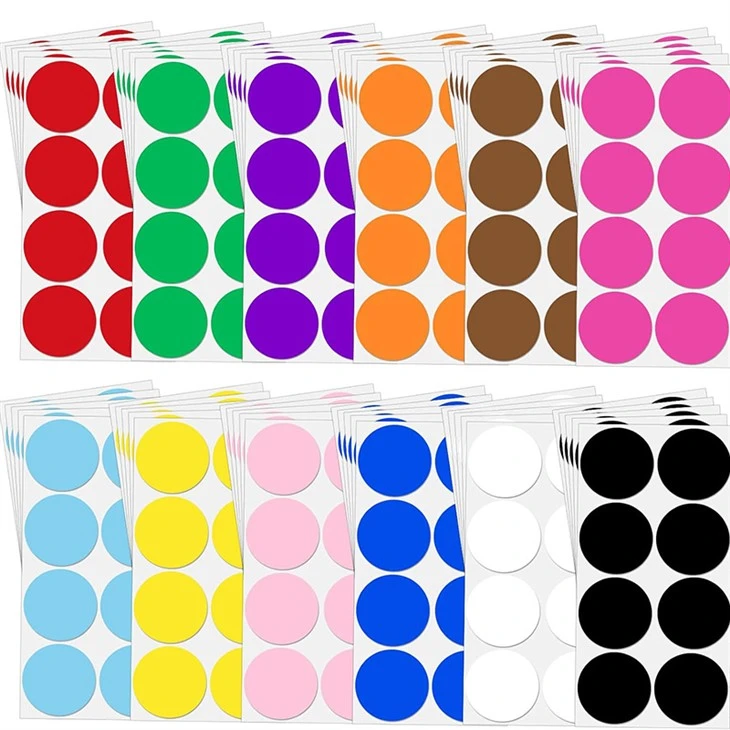
Wait, what about size? Round self adhesive labels are great for small items, but full page adhesive labels are all about size. The bigger the label, the more material is used, so if you can split a big design into multiple smaller labels (or use a continuous full page sheet for multiple smaller labels), you’ll save. For example, if you need 50 shipping labels, instead of ordering 50 individual 4x6 labels, order one full sheet that has 10 4x6 labels per page, so you get 50 labels from 5 sheets instead of 50 separate sheets. That cuts down on waste, and most vendors discount bulk orders for full-page sheet quantities because it’s faster to produce.
Speaking of bulk, but don’t overbuy just to save. It’s a common trap: the per-unit price drops when you order more, but only if you can actually use all those labels. If you’re a new startup testing a product line, don’t order 10,000 full page adhesive labels when you only need 500 for your first 100 products. Overstocking means paying for storage, and labels have a shelf life (usually 1–2 years, depending on material) before the adhesive starts to weaken. I’ve had customers call me a year later saying they still have 8,000 labels left because their product line changed, and they couldn’t return them. Ordering a quantity that matches your needs for the next 6–12 months is the sweet spot—you get bulk discounts without the extra cost of unused labels.
Now, design is where you can save a lot of money without hiring a professional designer. Most people don’t realize that printing full page adhesive labels with full-bleed designs (where the image goes all the way to the edge of the sheet) costs extra. That’s because the printer has to leave a small margin for cutting, and if the design goes right to the edge, they have to use specialized trimming equipment that adds time to production. If you can leave a 0.125-inch margin around your design (standard for most labels), you won’t pay any extra, and it still looks professional.
Also, stick to a single design file. If you need full page adhesive labels in multiple colors, switching between designs mid-print run requires cleaning the presses, changing ink cartridges, and resetting settings—all of which add to the cost. If you can wait to order different designs together, or pick a consistent design that works for all your products, you’ll cut down on setup fees. Another small design tip: use standard Pantone colors or process colors (CMYK) instead of custom spot colors. Custom colors require mixing unique ink for each order, which adds 15–20% to the cost. CMYK is the standard for most full-color designs, and it looks just as good for branding, packaging, and shipping labels.
When you’re vetting suppliers, look for transparent pricing and no hidden fees. A lot of label companies advertise “cheap full page adhesive labels” but add charges for die cutting, setup, proofing, or shipping that double your total. My business started because my sister tried to order labels for her candle brand from a big online vendor, and they quoted her $180 for 500 labels, then added $75 for “die cut setup” and $30 for expedited proofing, bringing the total to $285. We built our label line (including full page adhesive labels, pressure sensitive stickers, round self adhesive labels, and specialty materials) to have flat, all-inclusive pricing—no surprise charges, no minimums for small orders, and free digital proofs so you can make changes without paying extra.
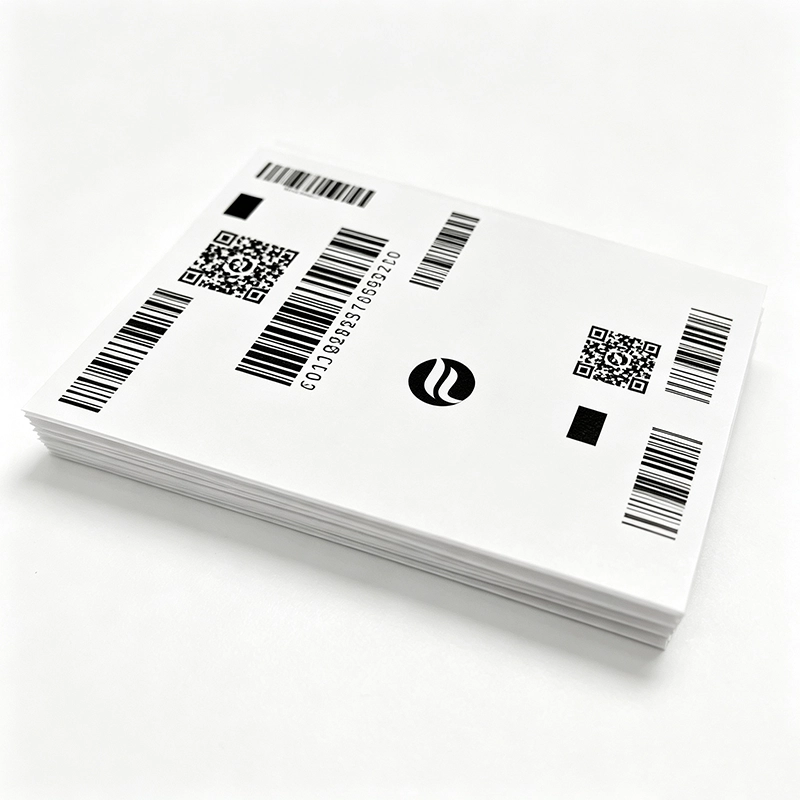
Also, ask about stock sizes. Most printers have pre-cut full page adhesive labels in standard sizes (8.5x11 inches, 8.5x14 inches, 11x17 inches) that are already stocked, so they don’t have to adjust their equipment for custom sizes. If you can use one of these standard sizes, you’ll save a lot compared to a custom size that requires new tooling. For example, a standard 8.5x11 inch full page sheet is 20% cheaper than a custom 9x12 inch sheet because the printer has pre-cut sheets ready to go.
Wait, what about shipping? Even if the label price is low, high shipping costs can erase your savings. Look for suppliers that offer flat-rate shipping for bulk orders, or free shipping over a certain quantity. We offer free standard shipping on all label orders over $100, which adds up when you’re ordering 500 or 1,000 full page adhesive labels. Also, avoid rush shipping unless you absolutely have to—standard transit is 3–5 days, which is more than enough for most small businesses.
Let’s talk about common myths that keep people overpaying for labels. Myth 1: Glossy labels are more expensive. No, matte and glossy labels are usually priced the same— the difference is in the coating, not the material. Myth 2: Custom die cuts are always needed for full page adhesive labels. If you don’t need a weird shape, full page sheets with multiple rectangular or square labels are cheaper and just as effective. Myth 3: Cheap labels look cheap. If you work with a reputable supplier that uses quality adhesive and paper, your labels will look professional. We’ve had startups that ordered our basic pressure sensitive stickers for their product labels, and they’ve gotten compliments from customers saying their packaging looks “high-end” because the printing is sharp and the adhesive holds strong.
Another tip: ask for samples before placing a big order. It takes 5 minutes to request a sample sheet of full page adhesive labels from a vendor, and it lets you test the adhesive strength, print quality, and material before committing to a large quantity. I always tell customers to stick a sample label on a glass jar, a cardboard box, and a plastic bag to make sure it adheres well for their intended use. If it doesn’t hold, you can switch materials (like waterproof self adhesive labels if the basic paper one falls off plastic) before you order 1,000 sheets.
And don’t be afraid to negotiate, especially if you’re a repeat customer or placing a large order. Most small label businesses are willing to offer 5–10% off for bulk orders, or waive setup fees if you’re ordering a quantity that’s above their average. I’ve given a lot of customers a discount because they’re launching a new product and need a little help, and it’s built long-term relationships—both ways.
Wait, let’s circle back to what “cheaply” actually means. It’s not just the lowest price per sheet—it’s getting a label that works for your needs, lasts as long as you need it, and doesn’t fall apart or peel off a package in the mail. For example, a $0.05 full page label that peels off a shipment mid-transit is way more expensive than a $0.07 label that stays on and looks professional. Quality adhesive and clear printing are non-negotiable for labels that represent your brand.
That’s why our line of full page adhesive labels is built to balance affordability and quality. We source our materials from trusted manufacturers, use modern printing technology for sharp, consistent colors, and offer all the specialty options—pressure sensitive stickers, round self adhesive labels, waterproof self adhesive labels, clear self adhesive labels—without marking up prices just for the “custom” label name. We also work with every type of business, from solopreneurs ordering 50 sheets to large brands ordering 10,000, so there’s a solution for every budget.
At the end of the day, making custom full page adhesive labels cheaply is about planning, being specific about your needs, working with a transparent supplier, and avoiding unnecessary add-ons that drive up cost. You don’t have to choose between saving money and getting high-quality labels that make your brand look good.
If you’re ready to place an order for custom full page adhesive labels, or have questions about materials, sizes, or pricing, reach out to our team to discuss your project and get a personalized quote. We’re here to help you get exactly what you need without the hidden fees or overpriced add-ons.
References:
- Label Industry Association of America. (2023). "Cost-Saving Strategies for Custom Label Production." Retrieved from LIAA Industry Reports
- Printware Inc. (2022). "The Shelf Life of Self-Adhesive Labels: A Guide for Small Businesses." Retrieved from Printware Resource Library
- Small Business Administration. (2023). "Budgeting for Packaging and Labeling for E-Commerce Businesses." Retrieved from SBA Small Business Guides
- International Coatings. (2022). "Material Selection for Self-Adhesive Labels: Matching Substrates to Application Use Cases." Retrieved from International Coatings Technical Papers
Send Inquiry